Razor-Back Clay Pick with Fiberglass Handle Review
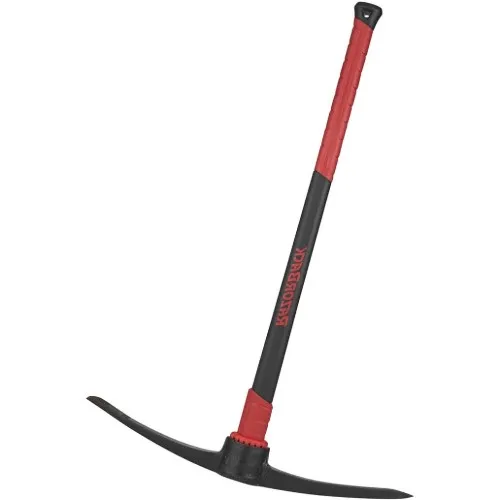
- Forged steel head for breaking clay, hardpan and rocky soil
- Fiberglass handle that won't rot, swell or dry out
- Industrial grade, made for landscaping and digging work
Opens Amazon.com · see today's price & availability
An industrial-grade #6 pick with a forged steel head and a fiberglass handle, made for the clay, hardpan and rocky ground that stops a shovel cold.
Quick verdict
When a shovel just bounces off the ground, a clay pick is the tool that gets you started, and the Razor-Back #6 Clay Pick is built for exactly that work. It has a forged steel head, a fiberglass handle and 8.7 pounds of total weight to drive the point in. Those are the fundamentals that matter on a pick, and this one has them covered.
Pros and cons
What we like
- Forged steel head stands up to repeated strikes on hard ground
- 8.7 lb total weight puts real mass behind every swing
- Fiberglass handle is unaffected by rain, mud and dry storage
- Industrial-grade build aimed at landscaping and construction work
- Part of the AMES family of brands, which dates back to 1774
What could be better
- Handle length and head dimensions aren't published
- Heavy enough to tire you quickly on long digging sessions
- Overkill for loose, well-worked garden soil
Key features, explained
What a clay pick is for
A clay pick concentrates the force of a full swing onto a narrow point, which lets it break into ground a shovel cannot: dense clay, compacted fill, hardpan and soil full of stones. The opposite end of the head is a flat chisel that pries out chunks and cuts through packed layers. Razor-Back lists landscaping, transplanting, edging and digging as its intended jobs, which matches how most people use a pick: loosen first, then shovel.
Forged steel head
The head is forged steel, the expected material for a striking tool that meets rock and hard soil on every swing. Razor-Back designates this model #6, and the product details describe it as industrial grade, made for the toughest jobs. That puts it in the heavy-duty class meant for regular work on landscape and construction sites rather than occasional garden use.
Fiberglass handle
The handle is fiberglass with red and black grip sections, as the product photo shows. Fiberglass handles do not absorb water, so they will not swell after a wet day, shrink in a dry shed or rot if the tool is left on site. That suits a pick, which tends to get dropped in mud and left out more than most tools. The trade-off is that a damaged fiberglass handle is harder to replace at home than a wooden one.
Weight and handling
The complete pick weighs 8.7 pounds. That is a serious amount of steel and fiberglass, and it is what makes a pick effective, since gravity and the head's mass do most of the work if you lift and let it fall rather than forcing the swing. It also means this is not a tool for long, unbroken sessions. Take breaks, keep feet planted wide and make sure nobody is within swinging distance.
Brand background
Razor-Back describes itself as a maker of professional landscaping and construction tools with more than 85 years behind it. The product description places the pick within the AMES family of brands, which traces its roots to a blacksmith shop founded in 1774. In other words, the pick comes from an established toolmaker rather than an unknown label.
Razor-Back Clay Pick specs
| Brand | Razor-Back |
|---|---|
| Model | 4119000 (#6) |
| Type | Clay pick |
| Head | Forged steel |
| Handle | Fiberglass |
| Overall weight | 8.7 lb |
| Grade | Industrial |
| Color | Black and red |
| Listed uses | Landscaping, transplanting, edging, digging |
| Prices change often. See the live price: Check Price | |
Who should buy it?
Great for
- Breaking up clay, hardpan or compacted fill before shoveling
- Digging post holes, trenches and planting holes in rocky ground
- Landscapers who want a handle that tolerates mud and rain
Skip it if
- Your soil is loose enough for a spade or digging fork
- You want a light tool for small planting jobs
- You need an adze blade for chopping roots, which a mattock has
Frequently asked questions
What is a clay pick used for?
Breaking into hard ground that a shovel cannot penetrate, such as dense clay, compacted fill and rocky soil. The point breaks the surface and the chisel end pries and cuts, then you clear the loosened soil with a shovel.
How heavy is the Razor-Back clay pick?
The complete tool weighs 8.7 pounds. That mass is what lets the point break into hard ground when you lift the pick and let it fall.
What does #6 mean in the name?
It is the size designation in Razor-Back's model name (4119000 #6). The complete pick, head and handle together, weighs 8.7 pounds.
What is the difference between a clay pick and a mattock?
A mattock usually pairs an adze-style blade with a pick or cutter, so it can chop roots and grub soil. A clay pick focuses its force on a point and a narrow chisel, which makes it better at breaking hard, packed ground.
What safety gear should I wear with a pick?
Eye protection, gloves and sturdy boots at minimum. Chips of rock fly when the point hits stone, so clear the area of people and pets before you start swinging.
Final verdict
The Razor-Back Clay Pick with Fiberglass Handle is a no-nonsense tool for ground that fights back: forged steel head, weatherproof fiberglass handle and 8.7 pounds of total weight. It is heavy and single-minded, which is exactly the point. For landscapers and homeowners facing clay, hardpan or rocky soil, it covers the essentials and comes from a long-established toolmaker.
Check PriceOpens Amazon.com · see today's price & availability
